

EXPLAINER: Is Hamas Being Pressured Over Its Support for Iran?
By Palestine Chronicle Editors

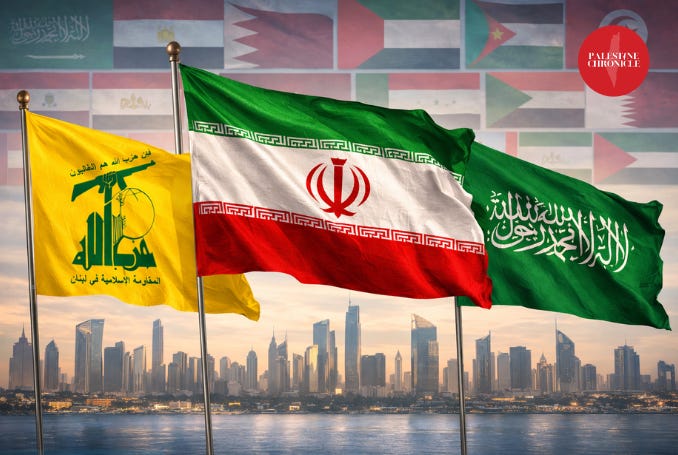
Hamas’ latest statement reveals growing political pressure as the movement balances resistance alliances and regional realities.
Why Did Hamas Suddenly Urge Iran Not to Target Neighboring Countries?
On March 13, International Quds Day, Hamas delivered one of its strongest messages of solidarity with Iran since the outbreak of the US-Israeli war against the Islamic Republic.
Statements from the movement and from Abu Obeida, spokesperson of the Izz ad-Din al-Qassam Brigades, praised Iran’s missile strikes against Israel and framed them as part of a broader regional confrontation tied directly to Palestine.
Abu Obeida described the strikes as an event that “brought joy to the hearts of our oppressed people,” while emphasizing that the regional war cannot be separated from the struggle over Jerusalem and Al-Aqsa.
But only a day later, on March 14, Hamas issued a new statement that appeared to introduce a significant caveat.
While renewing its condemnation of the US-Israeli aggression against Iran and reaffirming Tehran’s right to respond, Hamas also called on “the brothers in Iran not to target neighboring countries.”
At first glance, the message might appear contradictory. How can a movement that openly praises Iran’s military actions simultaneously urge Tehran to refrain from striking US military bases in regional states?
The answer lies not in ideological inconsistency but in political geography.
Hamas today operates across multiple arenas: inside Gaza, across the Palestinian territories, and within a wide diaspora (shatat) leadership scattered across several Arab and Muslim capitals. These different arenas impose different political pressures.
The movement is therefore attempting to maintain a delicate balance—preserving its strategic alliance with Iran and the wider resistance axis while avoiding political confrontation with the countries that host its political leadership.
Is Hamas Speaking with Two Voices?
The perception that Hamas sometimes communicates with two slightly different tones is not new.
The movement has long maintained an internal leadership structure rooted in Gaza and a political leadership operating in exile across several countries, including Qatar and Turkey. These external political platforms are crucial for Hamas’ diplomacy, media engagement, and international outreach.
However, they also expose the movement to the political sensitivities of host governments.
When Iran retaliates against US or Israeli positions in the region, the missiles and drones occasionally pass through or target US military bases in territories connected to the broader Gulf security architecture. Some Arab states hosting Hamas officials have been directly affected by the expanding regional conflict.
This creates a difficult situation for Hamas’ external leadership.
While the movement cannot politically distance itself from Iran—one of its most important strategic partners—it is laboring to avoid appearing indifferent to the security concerns of the countries that provide its political platforms.
The result is messaging that sometimes appears layered rather than contradictory: unwavering support for Iran’s right to resist aggression combined with appeals to avoid actions that could destabilize neighboring states.
In other words, Hamas is not speaking with two voices. It is speaking within two political realities.
What Does History Tell Us About This Dilemma?
Hamas has faced a similar strategic dilemma before.
During the Syrian conflict, the movement found itself caught between competing political pressures. At the time, Hamas’ leadership had long been based in Damascus, benefiting from close ties with Syria, Iran, and Hezbollah—relationships that formed the backbone of the regional “axis of resistance.”
However, as the Syrian war intensified, Arab governments sympathetic and supportive of the opposition began pressuring Hamas to distance itself from Damascus. At the same time, the Syrian government expected loyalty from the movement given its long-standing hospitality.
Hamas eventually took a position that angered Damascus and led to the relocation of its leadership outside Syria.
The consequences were severe.
The movement lost a critical strategic base and strained its relationship with Iran and Hezbollah. For years afterward, Hamas struggled to repair those alliances.
It was only through extensive diplomatic efforts—and with mediation from figures such as Hezbollah leader Hassan Nasrallah—that Hamas gradually rebuilt its place within the resistance axis.
This historical experience left a deep imprint on Hamas’ strategic thinking.
The movement learned that regional political pressures can push it into decisions with long-term strategic consequences.
Why Is Iran So Strategically Important for Hamas?
Iran’s importance to Hamas cannot be overstated.
For decades, Tehran has been one of the most consistent supporters of Palestinian resistance movements, providing political backing, military expertise, and logistical assistance. Unlike most Arab governments, Iran has done so unconditionally.
While Hamas maintains an independent Palestinian decision-making structure, the relationship with Iran has been central to the development of the movement’s military capabilities and regional alliances.
The events following Hamas’ October 7 operation further reinforced that strategic alignment.
As Israel expanded its genocidal war on Gaza, multiple regional fronts opened—from Lebanon to Yemen to Iraq—creating a multi-front confrontation with Israel.
Within this emerging regional dynamic, Hamas regained a central position within the broader resistance network.
The war also strengthened political coordination between Hamas, Hezbollah, and Iran, reversing much of the damage caused by earlier political disputes.
For Hamas, maintaining that relationship is therefore not merely ideological.
It is strategic.
Any perception that the movement is distancing itself from Iran could weaken its standing within the resistance axis and undermine years of effort to rebuild trust.
Is Hamas Being Pressured by Regional Governments?
The timing of Hamas’ latest statement suggests that external pressure may be playing a role.
The statement urging Iran not to target neighboring countries came immediately after the movement’s strong Quds Day expressions of solidarity with Tehran. Those earlier statements openly celebrated Iran’s strikes against Israel and emphasized the unity of the regional resistance.
Such messaging may have created discomfort among some Arab governments hosting Hamas officials—particularly those concerned about the expansion of Iranian retaliation across the region.
These governments provide Hamas with vital diplomatic and political space. They allow the movement to operate media offices, conduct international outreach, and maintain connections with regional political actors.
But that hospitality comes with implicit expectations.
Host countries often expect Hamas to avoid positions that could be interpreted as endorsing attacks affecting their territory or security interests.
This dynamic places the movement in a familiar but uncomfortable position: navigating between strategic alliances and political dependencies.
The March 14 statement, therefore, appears less like a shift in Hamas’ strategic orientation and more like a carefully calibrated attempt to reassure regional governments without abandoning its alliance with Iran.
Could This Balancing Act Become Dangerous?
Hamas’ attempt to navigate these competing pressures is understandable, but it carries risks.
Within the broader resistance camp, some voices—particularly in Lebanon—have already expressed concern about the tone of Hamas’ latest statement.
If the movement appears to soften its position toward Iran under regional pressure, it could revive old suspicions that Hamas may again drift away from the resistance axis during moments of political stress.
Such perceptions could weaken trust among Hamas’ most consistent allies.
At the same time, openly defying the concerns of Arab host governments could jeopardize the diplomatic platforms that Hamas relies on outside Palestine.
The movement is therefore attempting to walk an extremely narrow political path.
History suggests that such balancing acts rarely remain stable for long.
As the regional war intensifies, the pressure on Hamas to take clearer positions will likely grow.
The challenge for the movement will be to preserve its strategic alliances while avoiding the kind of political rupture that once cost it years of rebuilding.
(The Palestine Chronicle)